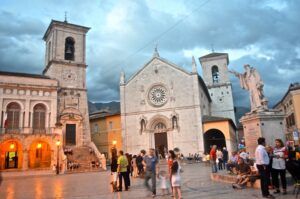
The teachings of St. Benedict of Nursia (c. 480–547 AD) are primarily encapsulated in his “Rule of St. Benedict,” a modest document that became the foundational blueprint for Western monasticism. Benedict didn’t set out to create a grand theological treatise; instead, he wrote a practical manual for living a “common life” (cenobitic) focused on seeking God.
His teachings are characterised by discretion, moderation, and a profound understanding of human nature. Below is a comprehensive summary of the core pillars that define the Benedictine way.
Contents
- 1 1. The Core Philosophy: Ora et Labora
- 2 2. The Three Vows
- 3 3. The Virtue of Humility
- 4 4. Community and The Abbot
- 5 5. Hospitality: The Guest as Christ
- 6 6. Moderation: The “Little Rule for Beginners”
- 7 7. Silence and Lectio Divina
- 8 Summary Table: The Benedictine Way
- 9 Conclusion
- 10 Mental Health Advocates / Wellness BloggersTurn Your Story Into Service—and Income—With Wealthy Affiliate
1. The Core Philosophy: Ora et Labora
The most famous shorthand for Benedictine life is Ora et Labora (Pray and Work). Benedict believed that a person’s day should be a balanced rhythm, preventing the soul from falling into the “enemy” of idleness.
- Prayer (The Work of God): Benedict called the communal prayer (the Divine Office) the Opus Dei. He taught that nothing should be prioritised over this. It involves chanting the Psalms at specific hours of the day, ensuring that the monk’s mind is constantly redirected toward the divine.
- Work: Manual labour was not seen as a distraction from spiritual life but as an integral part of it. Whether farming, copying manuscripts, or cooking, work was a way to practice mindfulness and contribute to the community’s self-sufficiency.
2. The Three Vows
While many associate monasticism with “Poverty, Chastity, and Obedience,” Benedict’s Rule specifically highlights a slightly different triad that defines the monk’s commitment:
- Stability: This is a unique Benedictine teaching. It requires the monk to stay with one community for life. In a world of constant movement, Benedict taught that spiritual growth happens by “staying put” and facing the challenges of one’s environment and peers rather than running away from them.
- Obedience: This is not about blind servitude but about “listening” (the root of the word ob-audire). A monk obeys the Abbot because they believe God speaks through the superior and the needs of the community. It is a tool to prune the ego.
- Conversatio Morum (Conversion of Life): This is the lifelong process of “monasticising” one’s behaviour. It’s a commitment to never stop growing, to remain a perpetual student of the Gospel, and to constantly refine one’s character.
3. The Virtue of Humility
The longest chapter in the Rule (Chapter 7) describes the Twelve Degrees of Humility. Benedict envisions humility as a ladder that the monk climbs to reach the love of God.
- Fear of God: Keeping God’s commandments always in mind.
- Self-Denial: Not loving one’s own will.
- Obedience to Superiors: Mimicking Christ’s obedience.
- Patience: Enduring hardships without grumbling.
- Confession: Admitting one’s faults to the Abbot.
- Contentment: Being satisfied with the meanest of tasks.
- Self-Abasement: Truly believing oneself to be inferior in some way to others.
- Strict Adherence: Following the common rule of the monastery.
- Silence: Speaking only when necessary.
- Restraint from Laughter: Avoiding frivolous or mocking wit.
- Soft Speech: Speaking gently and reasonably.
- Appearance: Maintaining a humble posture and gaze.
4. Community and The Abbot
Benedict’s teachings are deeply social. He believed that we find God through our relationships with others.
- The Abbot as Father: The Abbot is the spiritual head, representing Christ. However, Benedict warns the Abbot not to be a tyrant. He must adapt his teaching style to each monk’s temperament—gentle with some, stern with others.
- The Counsel of the Many: In a surprisingly “democratic” move for the 6th century, Benedict instructed that when important business arises, the Abbot should call the entire community together—including the youngest members—because “the Lord often reveals what is better to the younger.”
- The Sick and the Elderly: Benedict taught that the care of the sick must rank above all else. They are to be served as if they were Christ himself.
5. Hospitality: The Guest as Christ
One of the most enduring Benedictine teachings is found in Chapter 53: “All guests who present themselves are to be welcomed as Christ.” Monasteries were often the only “hotels” in the Middle Ages. Benedict insisted that when a guest arrives, the monks should meet them with prayer, humility, and a warm meal. This teaching emphasises that the divine is found in the “other,” especially the stranger or the poor.
6. Moderation: The “Little Rule for Beginners”
Perhaps the greatest legacy of St. Benedict is his moderation. Unlike the “Desert Fathers” who practised extreme fasting and self-mortification, Benedict allowed for:
- Adequate sleep (about 8 hours).
- Sufficient food and a “hemina” (about half a pint) of wine daily.
- Proper clothing suited to the climate.
He famously stated that the Rule was written so that “the strong have something to strive after and the weak have nothing to run from.” He called it a “little rule for beginners,” acknowledging that spiritual perfection is a marathon, not a sprint.
7. Silence and Lectio Divina
Benedict emphasised Silence (quies) not as a punishment, but as a space for listening. If one is always talking, one cannot hear the “still, small voice” of God.
Closely tied to this is Lectio Divina (Divine Reading). This is a four-step process of engaging with sacred texts:
- Lectio (Read): Reading a passage slowly.
- Meditatio (Meditate): Ruminating on a word or phrase.
- Oratio (Pray): Talking to God about the text.
- Contemplatio (Contemplate): Resting in God’s presence.
Summary Table: The Benedictine Way
| Concept | Teaching |
| Authority | The Rule and the Abbot provide the structure for freedom. |
| Possessions | Radical poverty; everything is held in common. No one “owns” even a pen. |
| Daily Life | A balanced cycle of prayer, work, and study. |
| Conflict | Peace (Pax) is the goal. Forgiveness must happen before the sun sets. |
| Focus | To “run with the unspeakable sweetness of love” toward God. |
Conclusion
The teachings of St. Benedict have survived for 1,500 years because they are profoundly human. He recognises that we are prone to laziness, grumbling, and ego, but provides a structural “school for the Lord’s service” to transform those traits into virtues. His focus on peace, stability, and the dignity of work continues to influence not just monks, but anyone seeking a grounded, purposeful life in a chaotic world.
Mental Health Advocates / Wellness Bloggers
Turn Your Story Into Service—and Income—With Wealthy Affiliate
If you’ve overcome mental health challenges or care deeply about helping others, Wealthy Affiliate gives you the tools to turn your voice into a platform—and your platform into income.
Share your journey, build a blog, create a supportive space online, and get paid doing it. You’ll learn how to build a real business rooted in purpose, not just profit. Whether you want to share healing, offer resources, or break stigma, WA gives you the guidance and support to make it happen.
Click here for full details.