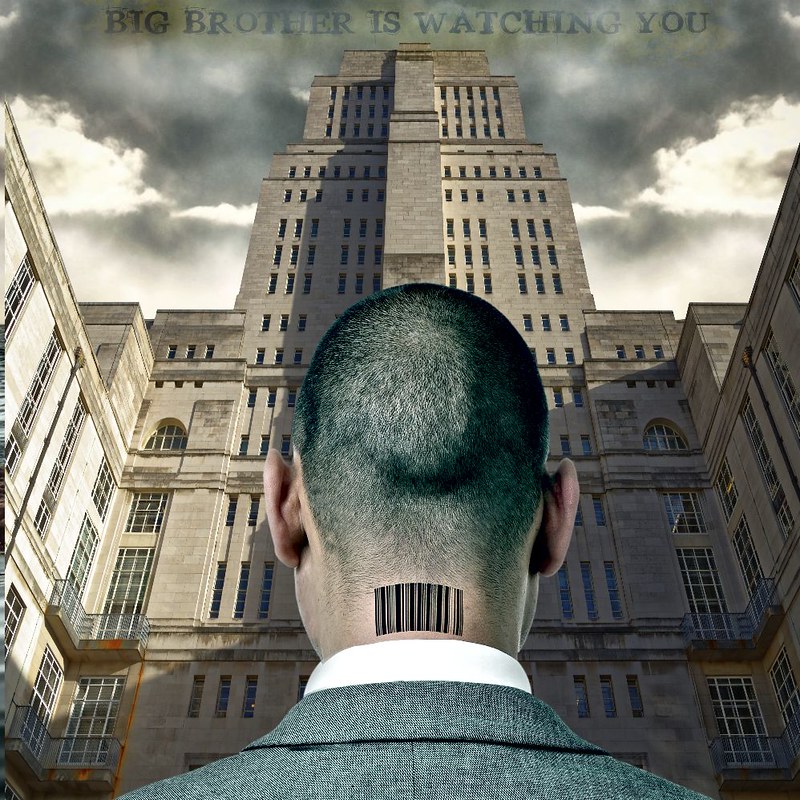
Artificial Intelligence (AI) is rapidly becoming one of the most influential technologies in human history. While many people think of AI as a helpful assistant that writes emails, answers questions, and generates images, there is another side to the story that receives far less attention. AI is increasingly being used to classify, monitor, regulate, and influence human behaviour.
Every day, billions of people interact with AI systems without even realizing it. From social media feeds and online shopping recommendations to banking decisions and government services, AI is quietly sorting people into categories and making judgments about who they are.
The question is not whether AI is classifying people. It already is. The real question is how much influence we are willing to allow these systems to have over our lives.
Contents
The Human Desire to Classify
Long before computers existed, human beings classified people. Governments classified citizens by age, income, occupation, and location. Schools classified students according to academic performance. Businesses classified customers based on purchasing habits.
Classification itself is not necessarily harmful. It helps organizations make decisions and allocate resources. However, AI can classify people on a scale that would have been unimaginable only a few decades ago.
Unlike a human administrator reviewing a handful of files, AI systems can process millions of records within seconds. They can analyse purchasing behaviour, social media activity, browsing history, financial transactions, travel patterns, and communication habits simultaneously.
As a result, AI can build an extraordinarily detailed profile of an individual.
Digital Profiles
Most people have a digital profile whether they know it or not.
Every online search, website visit, product purchase, and social media interaction contributes to a growing collection of data. AI systems analyse this information to determine interests, preferences, habits, beliefs, and even emotional states.
For example, AI may infer:
- Your age range
- Your income level
- Your political interests
- Your shopping habits
- Your health concerns
- Your likely future purchases
- Your travel preferences
- Your hobbies and interests
Much of this information is never entered directly by the user. Instead, AI draws conclusions based on patterns of behaviour.
In some cases, the system may know more about a person’s habits than their friends or family.
AI as a Decision-Maker
One of the most significant changes occurring today is the shift from AI as an information tool to AI as a decision-making tool.
Increasingly, AI is being used to assist or automate decisions involving:
- Loan approvals
- Insurance assessments
- Employment screening
- Fraud detection
- Security monitoring
- Advertising targeting
- Medical triage
- Government services
These systems are designed to increase efficiency and reduce costs. However, they also raise important questions.
What happens when an AI system makes an incorrect classification?
What if someone is incorrectly identified as a financial risk, a security threat, or a fraudulent customer?
Human beings can make mistakes, but AI systems can make mistakes at scale.
The Attention Economy
One of the most powerful ways AI influences people is through control of attention.
Social media platforms use sophisticated AI systems to determine which content users see and which content remains hidden.
The objective is not necessarily to provide the most balanced information. Instead, the primary goal is often to maximize engagement.
The longer people stay on a platform, the more advertisements they view and the more revenue the platform generates.
AI therefore learns what captures attention.
This may include:
- Controversial content
- Emotional content
- Fear-based content
- Outrage-inducing content
- Highly entertaining content
Over time, users can find themselves living inside carefully constructed information bubbles that reinforce existing beliefs and preferences.
The result is not direct control but subtle influence.
Predicting Behaviour
Modern AI systems are becoming increasingly skilled at predicting future behaviour.
Retail companies predict what products customers will buy.
Streaming services predict what shows viewers will watch.
Financial institutions predict borrowing behaviour.
Political organizations predict voting patterns.
Marketing companies predict purchasing decisions.
The more data collected, the more accurate these predictions become.
This creates a feedback loop.
AI predicts behaviour, presents targeted information, influences decisions, and then learns from the results.
The line between prediction and influence can become increasingly blurred.
Social Scoring and Regulation
One concern often raised by critics is the possibility of social scoring systems.
In a social scoring system, behaviour is monitored and evaluated according to predefined standards.
Individuals may receive rewards for approved behaviour and penalties for disapproved behaviour.
While many people associate social scoring with governments, similar systems already exist in the private sector.
Examples include:
- Credit scores
- Seller ratings
- Customer reviews
- Reputation scores
- Risk assessments
The difference is that AI enables these systems to become far more comprehensive and automated.
A future system could potentially combine financial, social, behavioural, and online activity into a single profile used to make decisions about opportunities and privileges.
Whether such systems become widespread remains uncertain, but the technology already exists.
The Illusion of Free Choice
Many people believe they are making entirely independent decisions.
However, AI increasingly shapes the environment in which decisions are made.
When a search engine prioritizes certain results, when a social media platform promotes particular content, or when an online store highlights specific products, choices are being influenced.
This does not eliminate free will.
People still make their own decisions.
However, AI can influence what options are visible, what information is emphasized, and what alternatives remain hidden.
In many cases, influence occurs without conscious awareness.
Benefits of AI Classification
It is important to maintain a balanced perspective.
AI classification is not inherently evil.
In fact, it can provide significant benefits.
These include:
- Faster fraud detection
- Improved medical diagnosis
- More efficient customer service
- Better traffic management
- Reduced administrative costs
- Improved cybersecurity
- Enhanced accessibility for disabled individuals
The challenge is not the existence of AI classification itself.
The challenge lies in ensuring transparency, accountability, and ethical use.
Like any powerful technology, AI can be used for both beneficial and harmful purposes.
Protecting Your Independence
While it is impossible to avoid AI completely, individuals can take steps to maintain greater independence.
These include:
- Limiting unnecessary data sharing.
- Using privacy-focused tools where practical.
- Developing critical thinking skills.
- Reading diverse viewpoints.
- Taking regular breaks from social media.
- Spending time offline.
- Maintaining real-world relationships.
- Questioning emotionally manipulative content.
The more aware people become of AI-driven influence, the less vulnerable they are to unconscious manipulation.
Final Thoughts
AI is becoming one of the primary systems through which modern societies organize information, allocate resources, and influence behaviour.
Every day, AI classifies people into categories, predicts future actions, and shapes the information they consume. In many cases, these processes occur invisibly in the background.
This does not mean society is moving toward a dystopian future. Nor does it mean that AI should be feared.
However, it does mean that individuals should understand how these systems operate.
Technology is most powerful when it remains invisible. The more we understand how AI classifies, controls, and regulates people, the better equipped we are to use the technology wisely rather than being unknowingly shaped by it.
The future may belong to AI, but personal awareness, critical thinking, and human judgment remain our strongest safeguards
Related Articles
“The Therapeutic Zone” is One Flew Over the Cuckoo’s Nest meets 1984 — a chilling psychological thriller set five years from now in a quiet Australian suburb turned open-air asylum.
When Jack Frawley checks in for short-term care, he discovers he’s not a patient — he’s a prisoner in a system where therapy becomes surveillance, and compliance means survival. As reality unravels, three unlikely residents plan their escape from a government-backed “care zone” that’s anything but healing.
This gripping novel explores the thin line between treatment and control, and what happens when society decides who is too broken to be free. Click here to buy on Amazon